
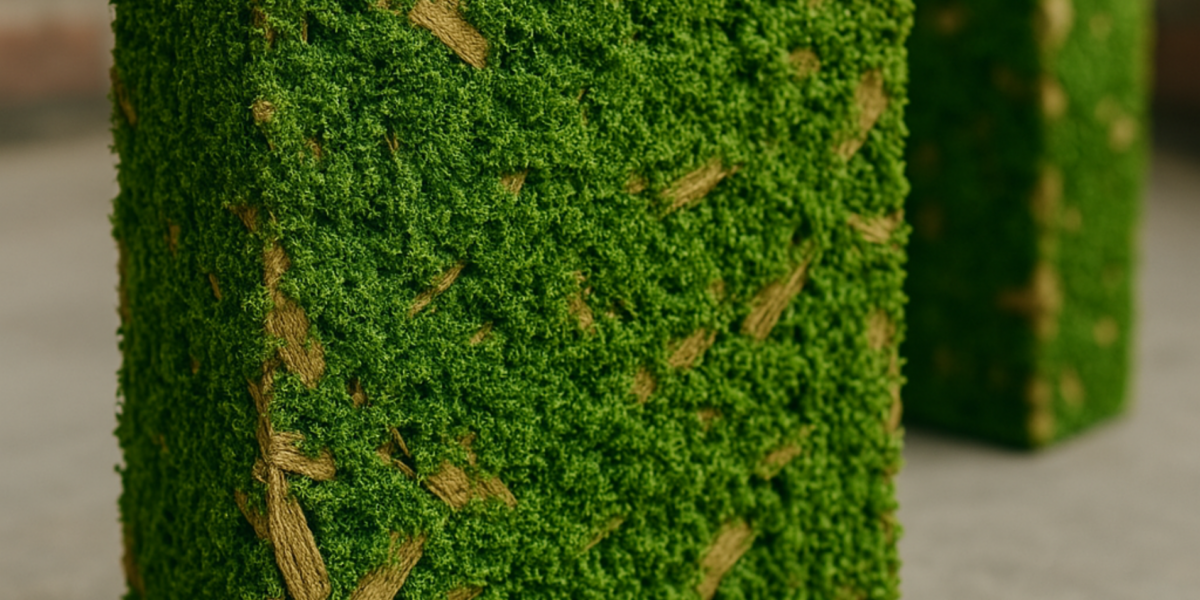
Building for the Future: Carbon-Storing Materials that Fight Climate Change
A New Era in Construction
The buildings we live and work in are often silent contributors to climate change. Traditional construction materials like concrete and steel release large amounts of carbon dioxide (CO₂) during production. In fact, the construction sector is responsible for nearly 40% of global CO₂ emissions (Architecture 2030, 2024). But what if our buildings could help reverse that impact? Today, a new wave of materials is reshaping the industry—carbon-storing building materials that absorb and lock away CO₂ instead of releasing it. These innovative substances transform homes, offices, and public buildings into active participants in the fight against climate change.
How Carbon Storage Works
Before diving into the materials, let’s clarify what it means to “store carbon.” Plants naturally absorb CO₂ as they grow, locking it into their leaves, stems, and roots. Materials made from or combined with these biological elements can trap that carbon for years—sometimes even centuries. There are also engineered approaches: some materials are infused with elements like biochar (a charcoal-like substance from organic matter) or use living microbes that capture carbon through photosynthesis, even after the material is installed.
Meet the Climate Heroes
Let’s explore five real-world carbon-storing materials—each with its own benefits, challenges, and use cases. Biochar Composites
- What it is: A material combining plastic-like resins with biochar (Dezeen, 2025)
- How it works: Biochar is created by heating organic material like wood or agricultural waste in a low-oxygen environment, locking the carbon inside.
- Impact: Each ton of material can trap up to 2.5 tons of CO₂.
- Use cases: Facade cladding, furniture, interior panels (e.g., Made of Air, 2023).
Hempcrete
- What it is: A mixture of hemp fibers, water, and lime that cures into a lightweight concrete alternative.
- How it works: Hemp captures CO₂ while growing, and the curing lime also absorbs CO₂ as it hardens.
- Impact: Can sequester around 110 kg of CO₂ per cubic meter.
- Use cases: Walls, insulation, non-load-bearing structures.
Mycelium Insulation
- What it is: A foam-like material grown from fungal root systems.(Dezeen, 2025)
- How it works: Mycelium consumes agricultural waste and stores the carbon from it.
- Impact: Carbon-storing potential is moderate, but its low-energy growth process is a big win.
- Use cases: Packaging, acoustic panels, thermal insulation.
Wood and Bamboo
- What it is: Two of nature’s oldest building blocks—sustainably harvested wood and fast-growing bamboo.
- How it works: Both store CO₂ during their growth and retain it unless burned or degraded.
- Impact: Around 1.8 tons of CO₂ per ton of dry wood.
- Use cases: Framing, flooring, cladding, furniture.
Living Materials with Cyanobacteria
- What it is: Cutting-edge “biogel” materials infused with photosynthetic microbes. (TechnologyNetworks, 2025)
- How it works: Cyanobacteria absorb CO₂ from the air, even while embedded in a wall.
- Impact: Experimental, but offers continuous carbon capture.
- Use cases: Currently in research, with potential for bricks and self-healing coatings (ETH Zurich, 2025).
Carbon Storage Showdown
Each material has strengths and trade-offs. Here’s a simplified overview:
| Material | CO₂ Storage Potential | Maturity | Longevity |
| Biochar Composites | ★★★★☆ (High) | Medium | 100+ years |
| Hempcrete | ★★★☆☆ (Moderate) | High | 50–100 years |
| Mycelium Insulation | ★★☆☆☆ (Modest) | Medium | 10–30 years |
| Wood/Bamboo | ★★★★☆ (High) | Very High | Depends on use |
| Living Materials | ★★☆☆☆ (Emerging) | Low | Still evolving |
The most powerful carbon lockers today are biochar composites and wood/bamboo, thanks to their high storage potential and stability over time.
What This Means for You—and the Planet
So, why does this matter to everyday people? Because carbon-storing materials are no longer niche—they’re becoming mainstream. Architects, developers, and even DIY home builders are starting to adopt these eco-friendly alternatives. By choosing materials that store carbon, we’re:
- Reducing emissions at the source
- Improving building performance (like insulation and durability)
- Supporting circular economies that rely on renewable or waste-based inputs
Cities like Copenhagen and Amsterdam now include carbon storage as part of their building codes. In the U.S., state-led programs like California’s Buy Clean Act are encouraging the use of low- and negative-carbon materials in public projects. Final Thoughts This is more than a technological shift—it’s a mindset shift. The future of construction doesn’t have to be a burden on the planet. In fact, it can heal it. And the best part? Every homeowner, builder, and designer can play a part in building a better legacy—one carbon-storing brick at a time. References
- Made of Air. (2023). Carbon-Negative Materials. https://www.madeofair.com
- Architecture 2030. (2024). Global CO₂ Emissions in Building. https://architecture2030.org
- ETH Zurich. (2025). A building material that lives and stores carbon. https://ethz.ch/en/news-and-events/eth-news/news/2025/06/a-building-material-that-lives-and-stores-carbon.html
- The Hempcrete Book. (2014). Designing and Building with Hemp-Lime.
- MycoWorks. (2023). Mycelium Materials and Applications. https://www.mycoworks.com
- IPCC. (2022). Climate Change Mitigation Report. https://www.ipcc.ch/report/ar6/wg3/
- Dezeen (2025) Ten materials that store carbon and help reduce greenhouse gas emissions. https://www.dezeen.com/2021/06/27/carbon-negative-carbon-neutral-materials-roundup/
- TechnologyNetworks (2025) A Living Building Material That Extracts CO2 From the Atmosphere. https://www.technologynetworks.com/applied-sciences/news/a-living-building-material-that-extracts-co2-from-the-atmosphere-401276
For more information or if you have any questions, please contact the author.